



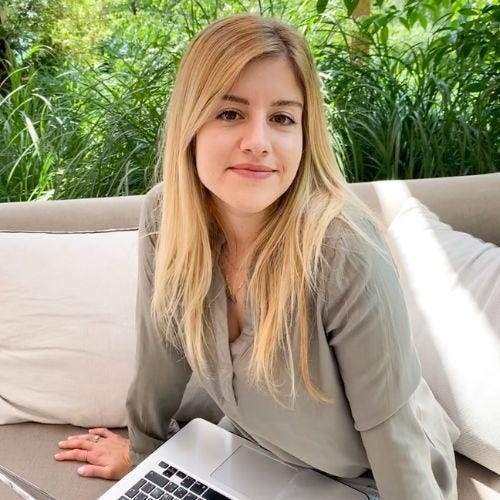
Ten years is a long time to keep showing up to something that's stopped talking back.
That's the part I kept turning over after I spoke with Lidiya Kesarovska. Not the platform switch, not the growth numbers the ten years before any of that, when she kept writing into a silence and didn't fully know why the silence had started.
"The blogging industry changed a lot in the last years," she told me. "The audience I built was quiet."
She wasn't getting feedback. She didn't know what her readers wanted anymore. And her business ran mostly on brand partnerships money coming in, but from the wrong direction. Businesses, not readers. The only real thread back to her most loyal people was email, and even that meant constantly asking people to leave wherever they already were and come read something else, somewhere new.
She tried social media. It didn't help.
"It was draining me," she said. "Looking back, I now realize it was a totally different audience there, and it didn't make sense to share long-form content with them or try to get them on my email list."
She tried Medium before that. "It didn't feel like the right place for me."
Two platforms, one instinct that kept getting proven right: something was wrong, and it wasn't going to fix itself.
"I knew something had to change but wasn't sure what."
Here's the thing that struck me, listening to her lay all this out through every bit of it, she never actually stopped. "One thing I never stopped was writing, and being helpful with my content." Whatever else was breaking down around her, that part held.
Then she came Substack. Not a grand decision, really more a pattern she noticed. "Most of my mentors were either leaving social media behind to start a Substack, or just turning it into their main content hub and sharing long-form content." So she followed the pattern. Started a publication. Didn't know yet what it would become.
“Once I came here, I saw the potential, and quickly started a publication. And the rest is history."
I wanted to know what was actually inside that "rest is history." Not the highlight reel the mechanics of it, the parts that don't fit neatly into a launch story. So I asked her to walk me through it, question by question, and mostly just let her talk.
The first thing she told me had nothing to do with strategy.
"I feel deeply satisfied with the work I'm doing," she said. "Something I haven't felt in a long time in my business."
It didn't happen instantly. Her first weeks on Substack, her writing wasn't finding the right people yet she was still learning the platform, still finding her footing. But somewhere in there, something shifted that had nothing to do with numbers. She started to feel like herself on the page again. "I feel validated as a writer and creator and am actually reaching the right people with my words."
Even her topic changed underneath her, almost without her choosing it. Her work now includes helping other writers understand what may be holding their Substack back through her Substack Growth Audit → she'd arrived planning to write about blogging and brand-partnership monetization the same territory she'd always covered. But she got curious about Substack itself, started documenting her own growth on it, and people noticed.
"People asked questions, I answered, and wrote more about that, and here we are today where that is my main topic."
Then there's the line that stopped me the first time she said it, almost in passing, like it wasn't a big deal to her anymore.
"Happy to report that business is not lonely anymore. In fact, it's more social and collaborative than ever."
Ten years of writing into silence, and now friends. Real ones, made through the work itself. "Substack is built for engagement, and the more I did it, the more ROI I saw. Plus, I genuinely enjoy it."
Her business model moved with her. She monetizes through the paid tier here now, and built a [ for writers who want someone to actually look closely at what's working for them.
None of this happened by accident, though it's tempting to tell it that way.
In five months, she published more than 80 articles, plus daily Notes. When I asked what was actually behind numbers like that, she didn't hand me a growth hack.
"I let my content do the work and speak for itself. I focus on authority and value." But she was clear that the content alone wasn't the whole engine. "Other factors play a role too who I am with others, how I take the time to respond, discover new writers and engage with their content, and show up daily and do that consistently."
She watched what actually worked. "I looked at the numbers and doubled down on the content that brought subscribers." And she kept asking her own readers what they wanted, instead of guessing. "I often ask the more engaged readers what they want to learn more about, and enjoy covering those topics in future posts."
She also started a Chat for her publication not sure it would land, doing it anyway. "My goal with it was to help others. I didn't know if it was going to work, but I decided to give it a try, make it not about myself but about my readers, and focus on community-building."
It worked better than she expected.
She wrote more about the specifics in

[.
There's a version of Lidiya's story that's just about growth tactics. That's not really the version she gave me.
When I asked how important community had actually been to all of this, she didn't talk about strategy at all. "Prior to joining Substack, they weren't my main focus. But here, it's all about working together, supporting each other, building a community, and being part of different communities."
She said something after that which I keep coming back to. "I opened myself up to new things here, and got out of my comfort zone, and that's what makes this year extra important for me."
That's not a marketing insight. That's a person describing a year that changed her.
We got to money eventually every conversation like this does. But even there, her answer wasn't really about numbers.
It's when you feel ready," she said, "when you're confident in what you'll offer paid members, and can actually maintain it without burning out." She's seen writers flip on a paid tier with nothing behind it, then panic when no one shows up. Her approach runs the opposite direction. "I prefer to have some good content ready for them, and be okay with no one joining, while continuing to grow my audience of free subscribers." She's written more on this in [a post about getting your first paid subscribers]
().
The same logic, she told me, applies whether you're selling subscriptions, digital products, services, brand deals, or affiliate work. "Learn about the monetization method, prepare, and go for it with confidence."
On what trips writers up most, she didn't hesitate: she said brand inconsistency. And she meant it far more broadly than most people define "brand." "Your brand is everything you do online" every post, every topic, whether you stick with it long enough to matter, every collaboration, what's in your navigation menu, every message you send a reader, even the comments you leave on someone else's post. "If it's all aligned with your values and what you're here to teach, you'll be remembered, and you become someone worth subscribing to."
When it's not aligned, she said, readers just get confused. And confusion doesn't make anyone want to stay.
On the tension between helping people and making money off that help, she didn't see much tension at all. "These two can work together. In fact, that's what I aim for with every piece of content I create." Most writers hear "selling" and think of direct promotion, which feels uncomfortable to them.
Her version is quieter than that. "How about serving your people? Hearing their struggles and offering solutions? Building trust with every action you take on Substack? And then releasing an offer so relevant to them that many have no other option but to invest in it? This is what selling means to me."
Even on authenticity, with AI now sitting in the middle of everything writers do, she didn't think the ground had really shifted. "It begins with being true to yourself, knowing what you stand for, and letting your words and actions reflect that." In practice saying no to things that don't feel aligned, even the ones everyone else would take. Not pretending to be anything she's not. Being, as she put it,
"the same person in my writing, in the comments and in the DMs."
I asked her what the hardest lesson had been. She didn't romanticize it.
"It's easy to get distracted, change direction too often, chase trends, be on the wrong platforms, target the wrong audience, monetize in a way that doesn't work for you." Which is why she's built pausing into the process itself stepping back regularly to check whether she's actually still headed somewhere she wants to go, still doing the work she came here to do.
I asked what she'd tell someone starting today. Her answer was almost disarmingly simple.
Have a monetization path from day one if you can. Decide what you want to be known for, never stop getting better at that thing, and write all about it. Once you've got a few hundred people who feel like your tribe, let them help guide what comes next. Play with Notes and everything else until you find what actually works for you and what you genuinely enjoy then do that, every day.
And when I asked whether she'd do anything differently, looking back at the whole decade
"There's nothing I wish I had done differently. It all led to this moment, after all."
She said it without hesitation, and there was something in her tone that made it clear this wasn't a rehearsed line. "We understand things only when we are ready, only after we've learned specific lessons, only when we feel worthy of taking a bigger step and going all in." Whatever else was true, gratitude came first. "It's a privilege to be able to do this work and to immerse myself in my craft daily."
She's not finished, of course. She just wrote about her next chapter, in fact, not long before we spoke.
With the foundation built and her voice found, she's restructuring her paid tiers — building a Founding tier and moving the Growth Audit there as a bonus, since it's some of the deepest work she does but also the most time-consuming, and there's only so much of it she can take on. She's adding a whole new section to make it more useful still.
Past that, nothing dramatic. "I will keep creating valuable content, both free and paid, and chat with readers every day in the comments and messages."
Here's what I keep sitting with, after everything she told me.
Lidiya isn't someone chasing an audience. She never really talks that way about numbers to hit, about tactics to deploy, about an audience out there to win over and convert. Every time the conversation turned toward growth, she turned it back toward people. What they were struggling with. What they wanted to learn. What she could build *with* them, not just *for* them.
Ten years of writing into a quiet room. And then, somewhere in the last five months, the room started talking back because she stopped trying to fill it alone, and started building it together with whoever showed up.
Business is not lonely anymore. Maybe that was always the real story.
Building in Public When You’re Still Figuring Things Out

I've always found it interesting how much of entrepreneurship we get to see online, yet how little we actually see of the process behind it.